The Journal · Famous stones
The Koh-i-Noor, and the stone that was recut
One of the most storied diamonds in the world was once judged dull. Its second life began on a cutting wheel in London.
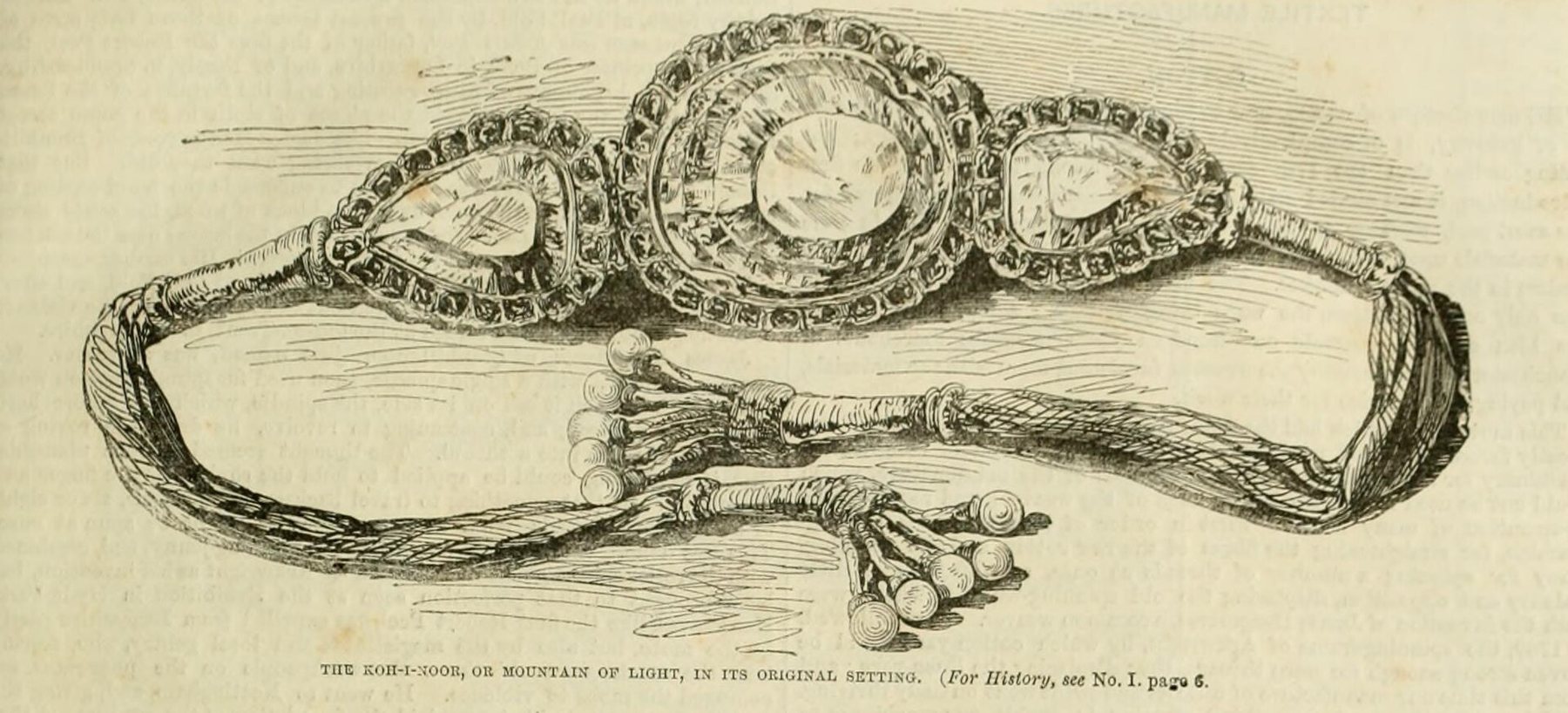
The Koh-i-Noor, Persian for Mountain of Light, belongs to the long diamond history of India. For centuries it passed from ruler to ruler: the Mughal emperors, the Persian conqueror Nader Shah, who carried it away from Delhi in 1739, the Afghan Durrani kings, and in 1813 Ranjit Singh of the Punjab.
After the British annexed the Punjab in 1849, the stone was surrendered to Queen Victoria, who received it in 1850.
A disappointment at the Great Exhibition
It was shown at the Great Exhibition in London in 1851, in its original Indian setting, pictured here. The public was underwhelmed. The stone had been cut to keep as much weight as possible, not to show fire, and beside a European brilliant it looked flat.
Recut
Prince Albert decided it should be recut. The work was done in London in 1852, with the Duke of Wellington placing the stone on the wheel for the first facet. It took the stone from about 186 carats to 105.6 carats. It lost nearly half its weight and gained its brilliance.
Today it is set in the crown made in 1937 for Queen Elizabeth, later the Queen Mother. Its ownership remains disputed by several countries.
Cutting is a decision. Every carat lost is a carat gone for good, which is why the planning matters more than the cutting.